Few upgrades change daily life in an NYC apartment like in-unit laundry, and few are as misunderstood. Whether you can add a washer and dryer is decided less by plumbing than by your building's rules, and the difference between an easy approval and a dead end usually comes down to how the proposal is engineered and presented. Here is the honest playbook we use when clients ask for laundry as part of a renovation.
Step One: What Does Your Building Allow?
Before you fall in love with a stacked pair behind cabinetry, read the alteration agreement and house rules, then ask the managing agent directly. Buildings fall into three camps: those that permit laundry with conditions, those that prohibit it outright, and the meaningful middle group with no explicit policy, where a well-engineered proposal can win approval. Co-ops are generally stricter than condos, and the reasons are rational: aging drain stacks, leak exposure over a downstairs neighbor, and venting. A proposal that answers those concerns specifically, with a licensed plumber's plan, travels much further than a spec sheet. Our board approval guide covers how these packages get reviewed.
Vented vs. Ventless: The Question That Answers Itself
Traditional dryers push hot, moist air through a duct to the exterior, and in a high-rise there is usually nowhere legal for that duct to go. That is why the modern NYC answer is ventless: condenser and heat-pump dryers that extract moisture to a drain or reservoir and need no duct at all. Heat-pump models in particular sip electricity, often run on a standard circuit, and are gentle on fabric. Cycles run longer than a vented machine, which is the honest trade-off. For boards, ventless removes an entire category of objection.
The Plumbing and Electrical Reality
The machines are the easy part. The work lives in the walls:
- Supply and drainage. The washer needs hot and cold supply and, critically, a properly sized, vented drain connection. Distance from an existing wet wall is the single biggest cost driver, since every foot means opening floors or walls.
- Power. Heat-pump dryers often run on a standard 120V circuit; larger vented-style machines want 220V. Older panels sometimes need capacity added, a scope we frequently bundle with other electrical work.
- Protection. A drain pan, water-hammer arrestors, a leak sensor, and an automatic shutoff valve are inexpensive insurance, and increasingly what boards require. In an apartment, your leak is your neighbor's ceiling.
Where the Machines Actually Fit
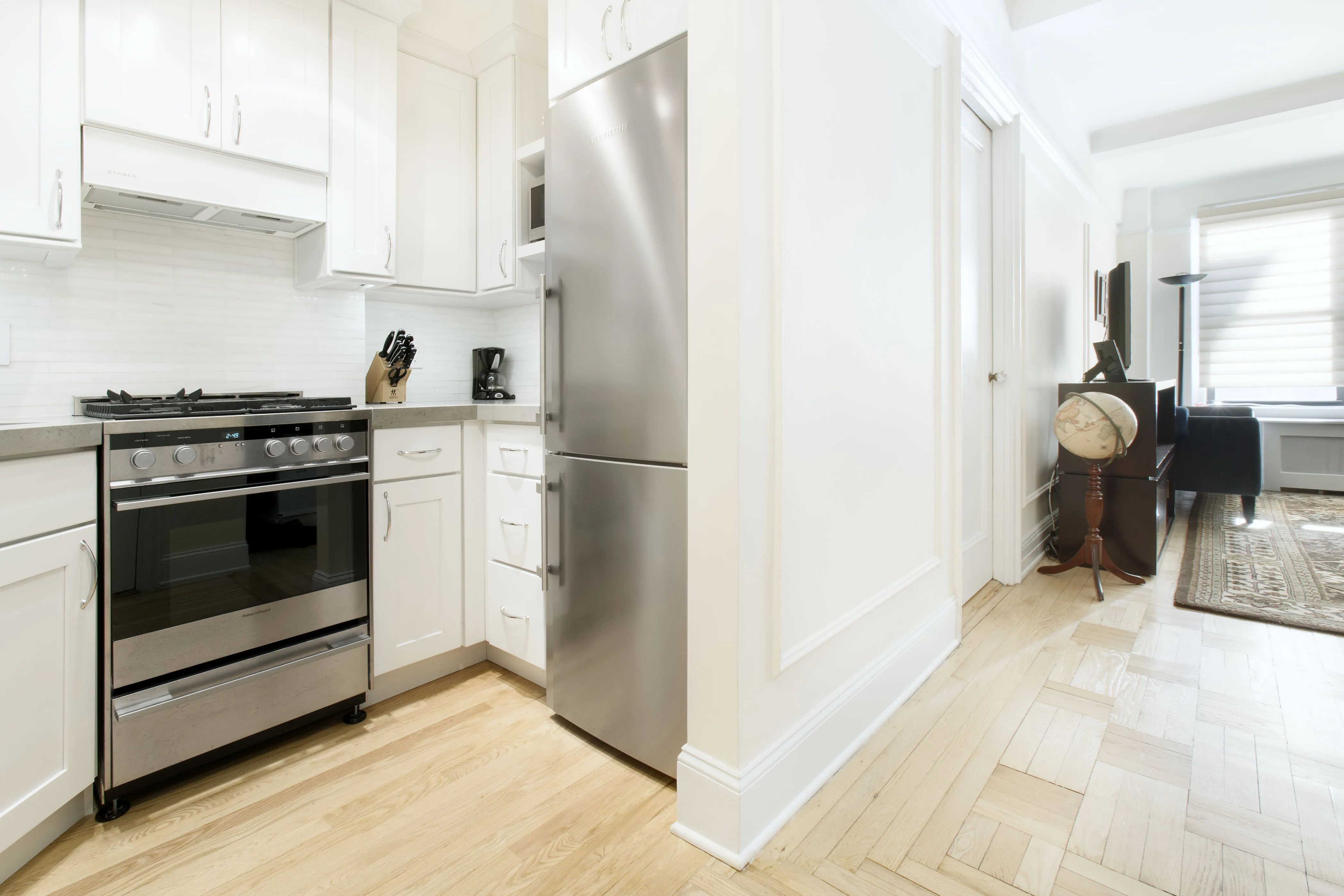
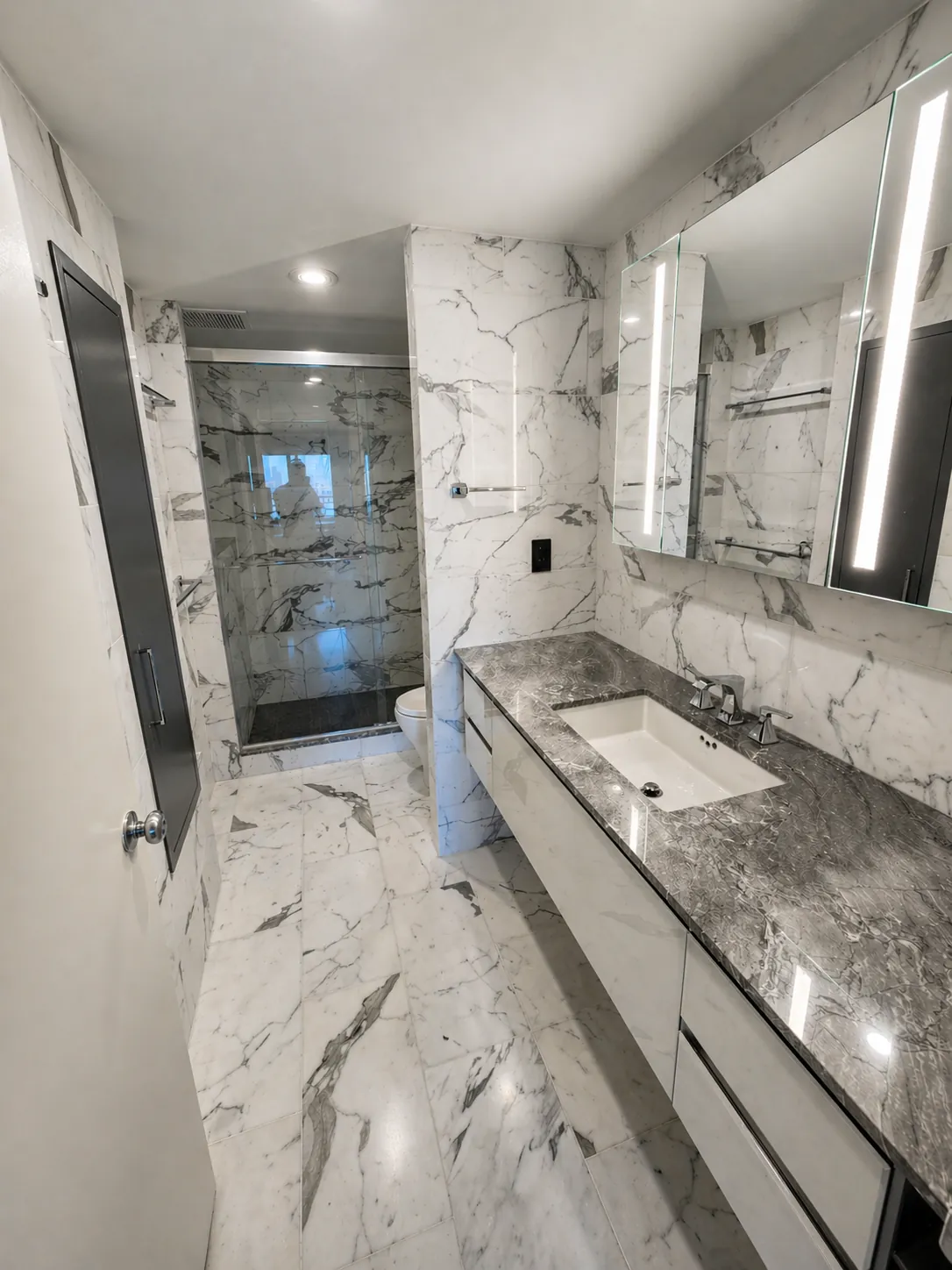
The best location is the closest workable spot to existing plumbing. In practice that means a closet backing up to a bathroom or kitchen, the end of a galley kitchen behind matching cabinet doors, or within a gut-renovated bathroom where the drainage is already open. During a gut renovation the options widen considerably, because walls are open and drain routing can be planned rather than retrofitted. This is also why adding laundry mid-renovation costs a fraction of doing it as a one-off project later.
What It Costs
Beyond the appliances, plan on roughly $10,000 to $25,000 or more for the installation itself: plumbing runs, electrical, carpentry and cabinetry to conceal the pair, and finishing. Short runs to an adjacent wet wall land at the low end; a location across the apartment from the risers, or a panel upgrade, pushes toward the high end. Folded into a kitchen or bathroom renovation that already has those walls open, the incremental cost drops sharply, which is one more argument for planning laundry as part of the larger scope covered in our renovation timeline guide.
It Also Pays You Back
In-unit laundry is consistently one of the features NYC buyers pay a premium for, alongside renovated kitchens and baths. Brokers list it in the headline for a reason. If you are weighing upgrades partly through a resale lens, laundry belongs near the top of the list with the projects in our guide to renovations that add value.
How Knockout Renovation Handles Laundry Projects
We have added washers and dryers to apartments across Manhattan and Brooklyn for more than 30 years: engineering the plumbing, specifying ventless equipment boards can approve, preparing the alteration package, and building the cabinetry that makes the machines disappear. If you want laundry in your apartment, tell us where you imagine it and we will tell you what your building will realistically approve, with a fixed price attached.
Frequently Asked Questions
Can I add a washer and dryer to my NYC apartment?
Often yes, but the building decides. Many condos permit in-unit laundry with proper installation, while co-ops range from fully permissive to a hard no. The first step is always the same: read your alteration agreement and house rules, then confirm with the managing agent before designing anything.
Why do some co-op buildings prohibit washers and dryers?
Older buildings worry about three things: drain stacks sized for sinks rather than high-volume washer discharge, leak risk above a neighbor's ceiling, and dryer venting. Some boards that once said no now approve ventless heat-pump dryers with pans, leak sensors, and automatic shutoff valves, because those address the actual risks.
Do I need a vented or ventless dryer?
In most NYC apartments, ventless is the practical answer. Venting to the exterior is rarely available or approvable, while modern heat-pump and condenser dryers need no duct, run on standard power in many cases, and are gentler on clothes. They take longer per cycle, which most owners consider a fair trade.
How much does it cost to add a washer and dryer in NYC?
Plan on roughly $10,000 to $25,000 or more all-in, beyond the appliances themselves. The range depends on how far your chosen location sits from existing plumbing and drainage, whether electrical service needs upgrading, and the cabinetry that conceals the machines. Adding laundry during a larger renovation is significantly cheaper than as a standalone project.
Where can a washer and dryer go in an apartment?
The best locations sit near existing wet walls: a closet adjacent to a bathroom or kitchen, the end of a galley kitchen, or inside a renovated bathroom. A stacked pair needs roughly 30 inches of width, water and drainage, power, and a pan piped to a drain or paired with leak detection.