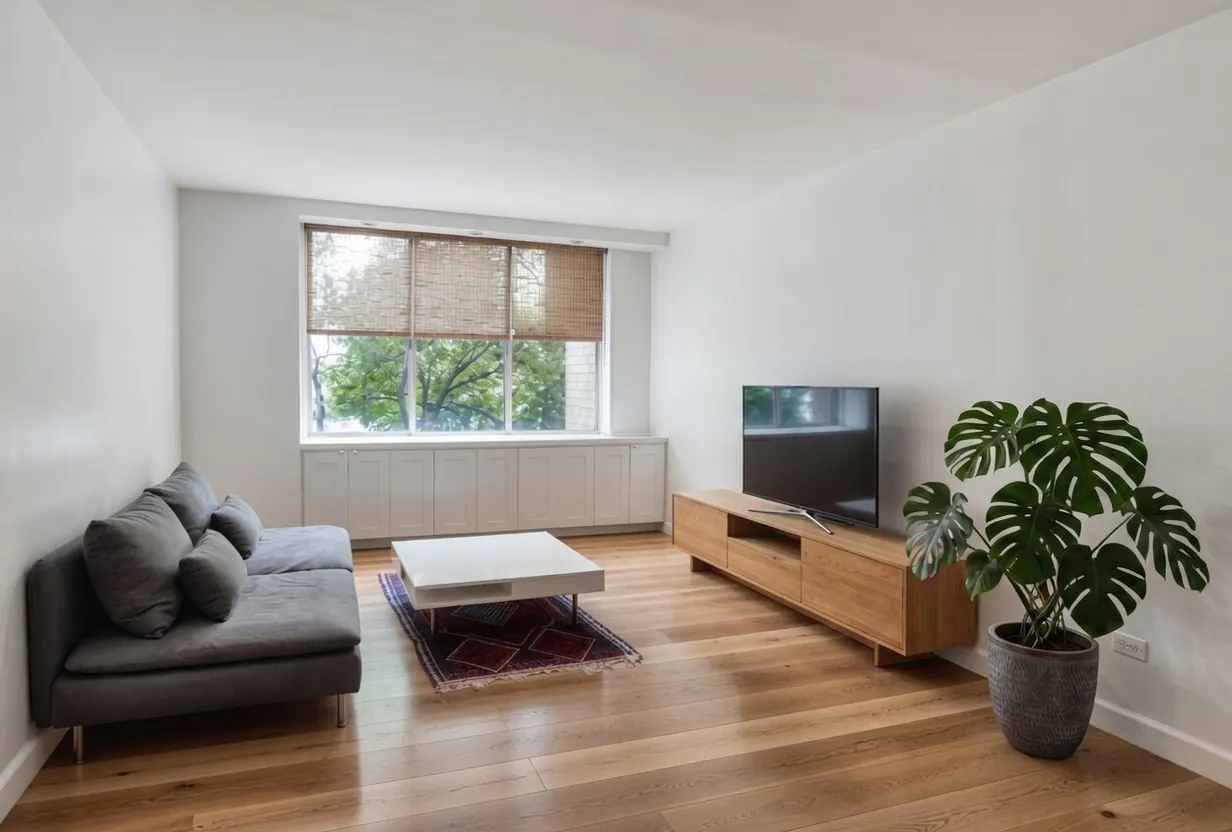
Walk into a renovated apartment that feels inexplicably right and the answer, more often than any other single thing, is the lighting. It is also the discipline most renovations underplan, because lighting is wiring, and wiring decisions get made early, while attention is on tile. The professional method is not complicated: light every room in three layers, dim everything, and respect what your ceiling is made of. Here is how that plays out in New York apartments.
The Three Layers
Ambient light fills the volume: recessed or surface fixtures, coves, and daylight. Task light lands where hands work: under-cabinet strips on counters, cross-lit mirrors, desk and reading lights. Accent light creates depth: washes on art and millwork, glow inside glass cabinets, a line of light under a floating vanity. A living room with all three layers on separate dimmers can host a dinner party, a movie, and a Tuesday of emails without once feeling like an office. A room with one ceiling source cannot, at any price.

The NYC Ceiling Problem, and Its Elegant Solutions
Much of this city's housing has concrete slab ceilings with no cavity, which is why so many apartments grew up on a single ceiling fixture per room. Renovation solves it architecturally: a furred perimeter or soffit creates the depth for coves and discreet recessed fixtures, plaster-in and surface-mounted fixtures have become genuinely beautiful, and walls carry sconces and picture lights where ceilings cannot help. In prewar rooms with original moldings, the goal is light that flatters the architecture without perforating it, a sensibility that runs through our prewar renovation guide. Where recessed lighting is possible, restraint wins: fewer, better-placed fixtures washing walls beat a ceiling gridded like a parking garage.
Linear LED, Used Like an Adult
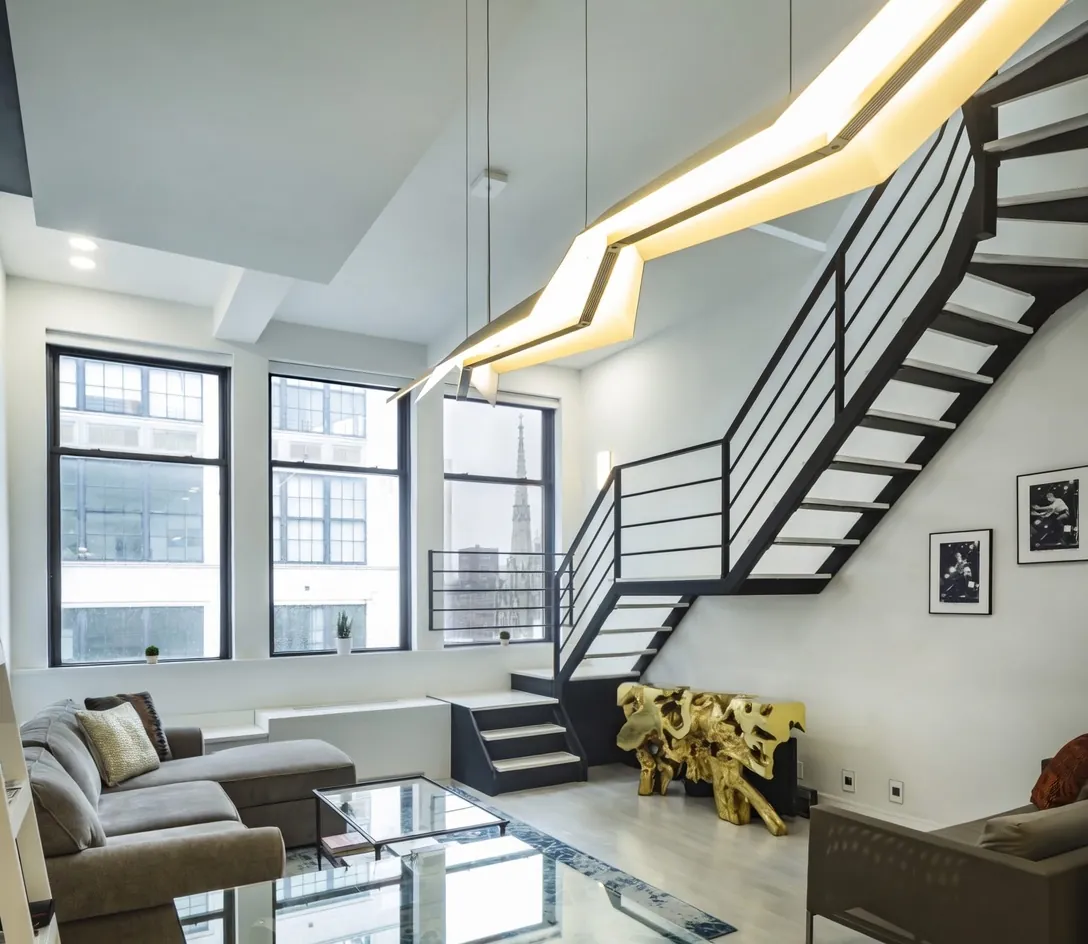
Concealed LED strip is the workhorse of modern apartment lighting: coves above millwork, under-cabinet task runs, toe-kick and shelf lighting, closet rods that light when doors open. The craft is in concealment and quality: diffusers so you see glow rather than dots, high-CRI tape, drivers accessible for service, and color temperature matched to the room's other sources. Our media walls and custom closets lean on exactly this vocabulary, light as a built-in material rather than an accessory.
Temperature, Quality, and Control
Three specifications do most of the work. Color temperature: 2700K in living spaces and bedrooms, up to 3000K in kitchens and baths, never mixed within a sightline. Color rendering: CRI 90 or better, so stone, wood, and skin look like themselves. Dimming: everywhere, with LED-compatible dimmers specified to the fixture, because full brightness is a setting you will use twice a year. Scene keypads that collapse a wall of switches into labeled buttons are the one control upgrade nearly every full renovation deserves; the deeper automation question belongs to our smart home guide.
Room by Room, Briefly
- Kitchens want strong task light on every counter, dimmable ambience for evenings, and pendants scaled to the island.
- Bathrooms want the mirror cross-lit at face height, sconces or lit mirrors, never a single overhead that shadows every feature it finds.
- Bedrooms want low, warm layers, bedside light off the nightstand surface, and blackout-friendly switching by the bed.
- Dining rooms want the statement fixture, hung low enough to gather the table, on the smoothest dimmer in the apartment.
How Knockout Renovation Designs Light
Lighting is planned at the drawing stage of every project we build, circuits, layers, and controls decided while walls are open and changes are cheap. Your Designer Project Manager selects fixtures with you, our electricians wire it under permit, and the result is priced fixed and warrantied for 7 years like everything else we build. If your apartment has great bones and one sad ceiling fixture per room, lighting may be the highest-return line in your entire renovation. We would be glad to show you what three layers would do to your floor plan.
Frequently Asked Questions
What are the three layers of lighting?
Ambient light that fills the room, task light aimed at work such as counters, mirrors, and desks, and accent light that gives the room depth by washing walls, art, and millwork. Rooms lit with all three feel expensive at any budget; rooms lit with one overhead source feel flat no matter what it cost.
Can I add recessed lighting to a prewar apartment?
Often not into the slab itself, since many prewar ceilings are concrete with no cavity. The workarounds are the point: furred or dropped perimeter details that create depth for coves and small recessed fixtures, surface-mounted and plaster-in fixtures, and wall-mounted lighting. Done well, the workaround looks better than a grid of cans.
What color temperature should apartment lighting be?
Warm white, 2700K, is the classic residential temperature, with 3000K acceptable in kitchens and baths. Keep it consistent within a room, insist on high color quality, CRI 90 or above, and put everything on dimmers. Mixed temperatures in one sightline are the most common giveaway of unplanned lighting.
Are smart lighting controls worth it in a renovation?
For most full renovations, yes in moderation: scene keypads that replace banks of switches, dimming everywhere, and a few schedules. The renovation moment matters because the wiring for keypads and separately switched layers must be planned while walls are open. The deeper systems are covered in our smart home guide.
Which light fixtures are worth spending on?
The ones at eye level and in the sightlines: the dining pendant or chandelier, sconces, and the fixtures over a kitchen island. Recessed and concealed sources can be workmanlike. A single sculptural fixture in the right place does more for a room than a dozen ceiling cans.