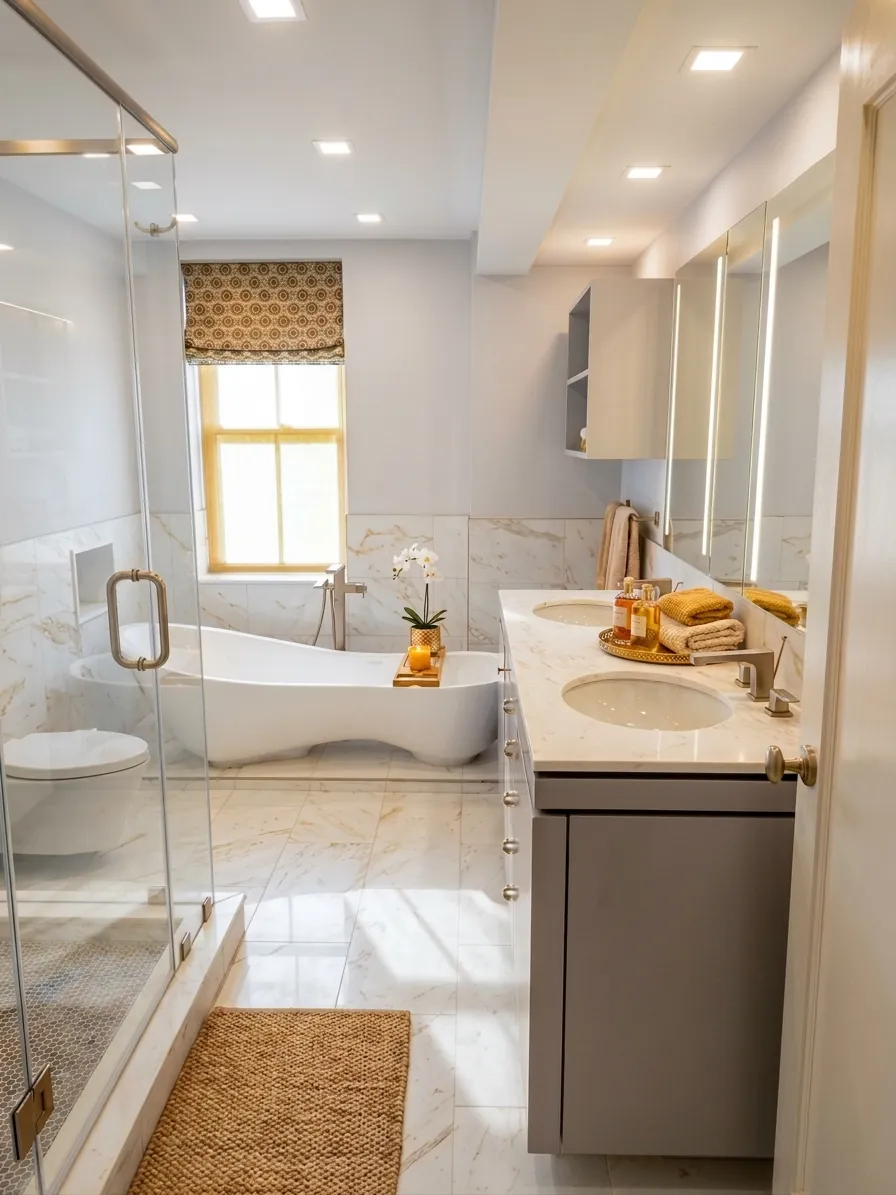
Bathroom renovation costs in NYC surprise almost everyone, usually in the same direction. For a quality renovation in Manhattan or Brooklyn, a realistic budget is $35,000 to $55,000 for a cosmetic renovation and $55,000 to $90,000 or more for a full gut renovation. Those are wide bands, and where your project lands inside them comes down to a handful of decisions this guide walks through: the layout, the wet areas, the materials, and the building itself.
The Two Kinds of Bathroom Renovation
A cosmetic renovation keeps every fixture where it is and replaces what you see: new tile, vanity, toilet, tub or shower fittings, lighting, and accessories. Because the drainage and supply lines stay put, the plumbing scope is modest and the schedule is shorter.
A gut renovation takes the room to the studs. Old plumbing is replaced back to the riser, the subfloor and wall substrates are rebuilt, waterproofing is done to modern standards, and the layout can change. In prewar buildings this is often the right call regardless of aesthetics, since the original galvanized branch lines and cracked mud beds under the tile are usually at the end of their life. Our prewar renovation guide covers why what is behind the wall matters as much as what is on it.
Where the Money Actually Goes
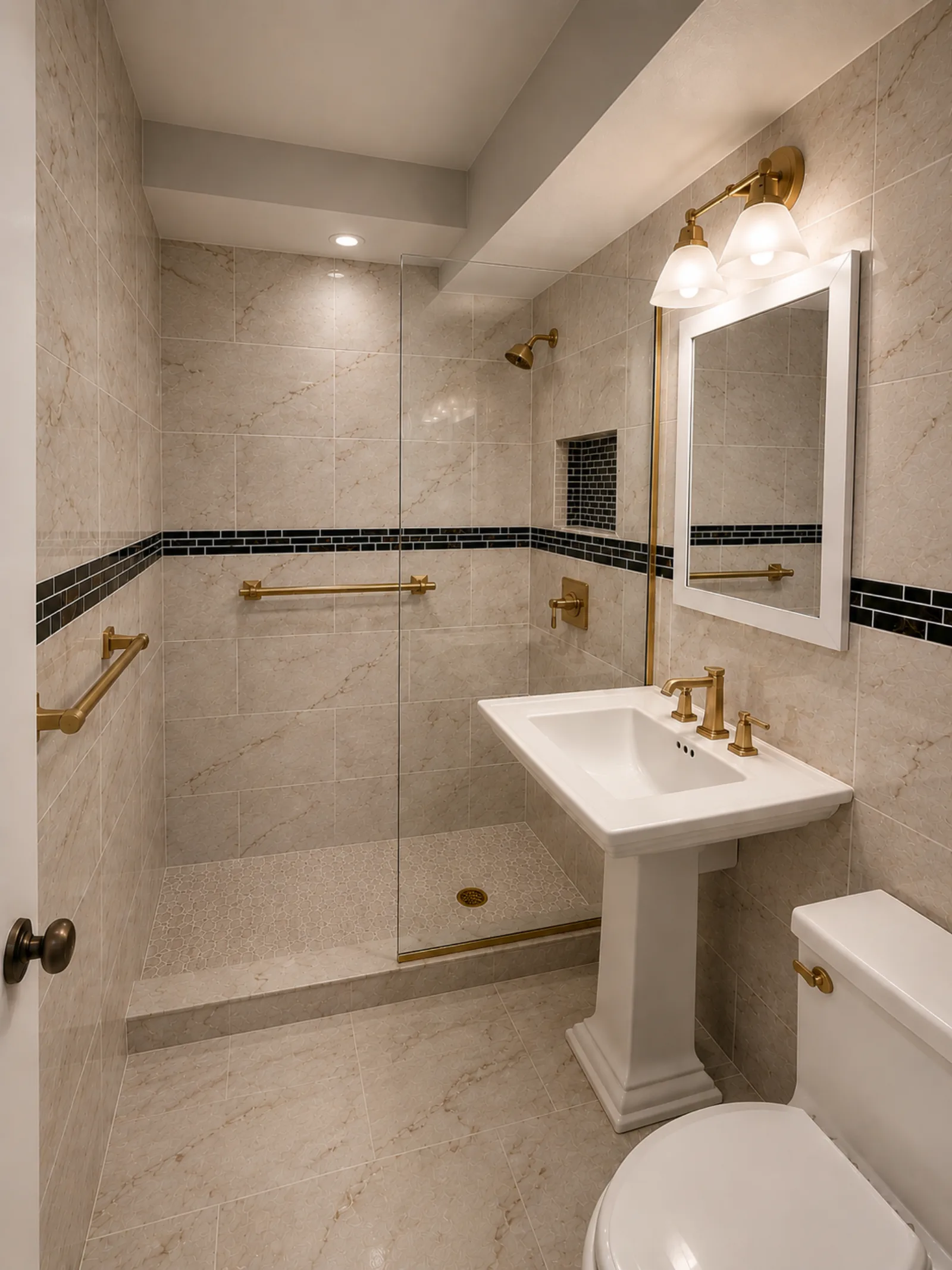
On a typical NYC bathroom, the budget breaks down roughly like this: labor and project management around 40 to 50 percent, tile and stone 15 to 20 percent, fixtures and fittings 15 to 20 percent, the vanity and storage 10 to 15 percent, and glass, lighting, and accessories making up the rest. Two line items deserve special respect. The first is waterproofing, the membrane system behind the tile, which nobody sees and everything depends on. The second is tile labor, where precision work such as book-matched slabs, mitered edges, and mosaic bands takes real hours from real craftspeople. Our guide to tile selection for NYC bathrooms explains how format and material choices ripple into the labor number.
What Pushes the Number Up
- Moving plumbing. Relocating the toilet or shifting the shower means opening floors and walls and tying into the building's risers. It is the single biggest budget multiplier.
- Natural stone. Marble slabs, stone-clad shower walls, and matching curbs and jambs raise both material and fabrication costs.
- Custom glass. Frameless enclosures, especially oversized or steam-rated ones, are fabricated to the millimeter.
- Comfort upgrades. Radiant floor heat, thermostatic shower systems, wall-hung toilets, and integrated lighting all add rough-in work.
- Building requirements. Insurance minimums, protection of common areas, restricted work hours, and required building personnel all show up in NYC bids.
What Keeps the Number Down
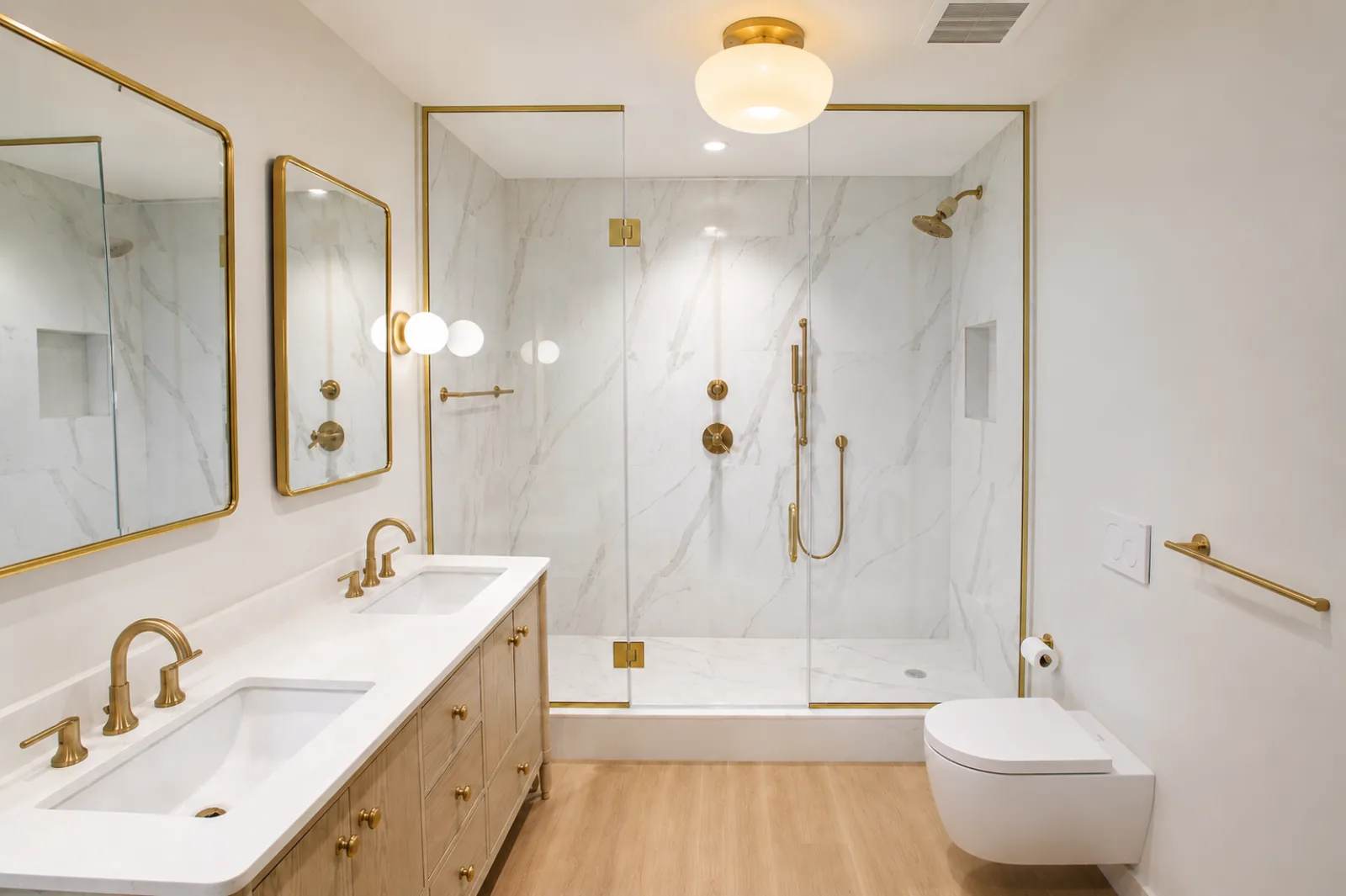
Keeping the existing layout is the big one. Beyond that: porcelain tile that delivers the look of stone at a fraction of the material and maintenance cost, a quality prefabricated vanity instead of custom millwork, and making every selection before construction begins. Changing tile mid-project is how budgets quietly grow. A complete design phase, with fixtures and finishes locked, is what allows a firm to give you a fixed price rather than an estimate, a distinction we cover in how to choose a renovation contractor.
The NYC Factor: Boards, Permits, and Buildings
Any bathroom work involving plumbing or electrical means permits filed by licensed trades and, in most co-ops and condos, an alteration agreement before work starts. Budget time for it as much as money: board review can run from a couple of weeks to a couple of months, which is why it belongs at the front of your renovation timeline. The approval process itself is manageable when the package is complete and professional, something we walk through in our board approval guide.
A Realistic Budget Framework
Start with the honest bands: $35,000 to $55,000 cosmetic, $55,000 to $90,000 and up for a gut. If your building is prewar, assume the gut band. Then hold 10 to 15 percent as contingency, not because good contractors miss their numbers, but because a 90-year-old wet wall occasionally has opinions of its own. If the quote you receive is dramatically below these ranges, be careful: in our experience the difference reappears later as change orders. You can see how we structure transparent pricing on our pricing page.
How Knockout Renovation Approaches Bathroom Budgets
For more than 30 years we have renovated bathrooms across Manhattan and Brooklyn as a design-build firm: one team from first sketch through board approval, construction, and final walkthrough. Every selection is made during design, every price is fixed before demolition, invoicing tracks completed work weekly, and the finished bathroom is backed by our 7-year warranty. If you are budgeting a bathroom and want a real number instead of a range, we would be glad to give you one.
Frequently Asked Questions
How much does a bathroom renovation cost in NYC?
In Manhattan and Brooklyn, a cosmetic bathroom renovation typically runs $35,000 to $55,000, while a full gut renovation runs $55,000 to $90,000 or more. The final number depends on whether plumbing moves, the tile and stone scope, fixture selections, and your building's requirements.
Why are NYC bathroom renovations so expensive?
Labor and insurance costs are higher in NYC than almost anywhere else, and apartment work adds requirements a suburban bath never faces: co-op and condo alteration agreements, building insurance minimums, protected common areas, restricted work hours, and plumbing tied into shared risers. Skilled wet-area work, especially waterproofing and tile, is also genuinely labor intensive.
How long does a bathroom renovation take?
Once construction starts, a typical NYC bathroom takes 4 to 6 weeks. Add time before that for design, fixture and tile lead times, and co-op or condo board approval, which can take several weeks to a few months depending on the building.
Do I need board approval to renovate my bathroom?
Almost always, yes. Any work involving plumbing or electrical requires an alteration agreement in most co-ops and condos, along with permits filed by licensed trades. A purely cosmetic refresh, such as new paint and accessories, generally does not.
What adds the most cost to a bathroom renovation?
Moving fixtures is the biggest multiplier, since relocating the toilet, sink, or tub means new drainage and supply lines. After that: natural stone slab work, custom glass enclosures, radiant floor heat, and premium fixture packages. Keeping the existing layout is the single most effective way to control the budget.