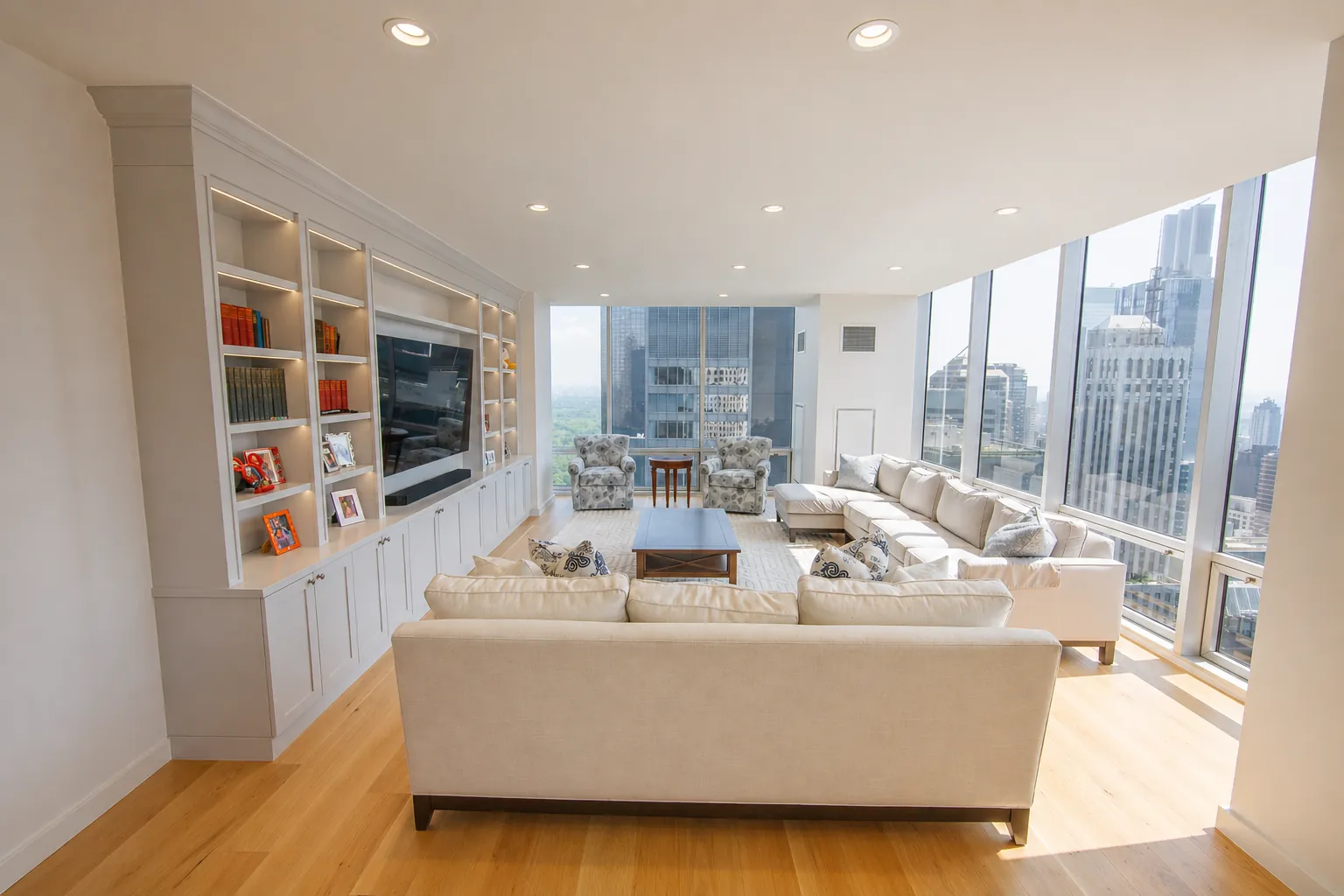
The open-concept living room — combining what was once a separate kitchen, dining room, and living area into a single connected space — remains one of the most-requested transformations in NYC apartment renovations. Done well, the result is dramatic: a small classic-six apartment that felt cramped suddenly reads as a generous loft, with sightlines that capture light from every direction and a layout that supports the way people actually live today. Done poorly, the same project can deliver an awkward room with structural compromises, acoustic problems, and a co-op board that is unhappy with the execution. This guide covers what we have learned from completing open-concept renovations across Manhattan and Brooklyn.
Step One: Identifying Load-Bearing Walls
Before any wall comes down, the structural role of every wall in the apartment has to be established. In NYC apartment buildings, load-bearing walls are far more common than in single-family homes — most prewar buildings rely on a system of interior masonry walls to support the floors above, and many postwar buildings use concrete shear walls at structural locations. Removing the wrong wall is not a minor problem. It is a building-wide structural issue that can compromise units above and below.
Identifying load-bearing walls in your specific apartment requires:
Original architectural drawings if available from the building. These often show structural walls in heavier line weight or with specific notation. Many co-op management companies keep these on file from when the building was constructed or last converted.
A site visit by a licensed structural engineer.For any wall removal in NYC, an engineer's stamped letter is almost always required by the co-op board and by the Department of Buildings as part of the alteration permit application. The engineer evaluates load paths, identifies what each wall supports, and specifies what beam or other support is needed if a load-bearing wall is removed.
Exploratory demolition in some cases. When the original drawings are missing or unclear, a small section of the wall may need to be opened up to see exactly how it is constructed. We coordinate this with the engineer and building management, and we patch the opening promptly if the answer is "this stays."
Beam Selection: Steel, LVL, or Flush?
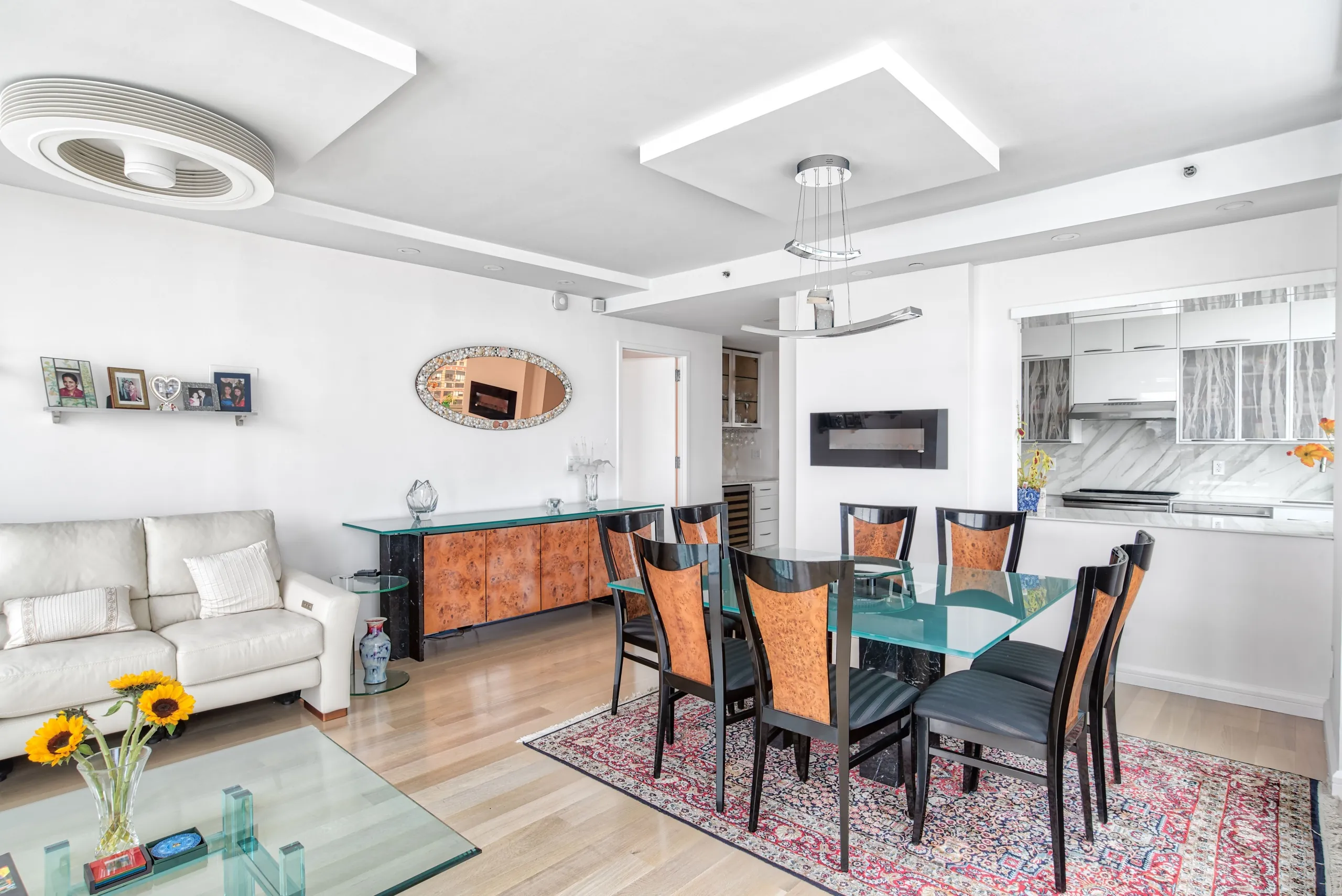
When a load-bearing wall is removed, a beam takes over the job of supporting the floor above. The beam selection is one of the most consequential decisions in an open-concept renovation, because it affects ceiling height, sightlines, and the visual feel of the finished space.
Steel I-beams are the strongest option for a given depth and are often required for longer spans (over 14 to 16 feet) or in buildings with heavier floor loads above. A steel beam can be left exposed and painted as a design feature — a look that works particularly well in loft-style spaces — or wrapped in drywall to disappear visually. Either way, steel is heavy, requires careful coordination of how it gets into the apartment (often in pieces, then welded on site), and adds cost.
LVL (laminated veneer lumber) beams are engineered wood beams that work well for shorter spans and lighter loads. They are easier to handle than steel — typically no welding required, can fit in elevators in standard lengths — and they can be stained and exposed for a warm wood-beam aesthetic. For many NYC apartments, an LVL beam is a great fit.
Flush vs. dropped beams. A flush beam sits inside the floor system above and preserves full ceiling height in the finished room. A dropped beam hangs below the existing ceiling line, which is faster and less expensive to install but reduces headroom in the area where the wall used to be. For NYC ceilings — which often range from 8 to 11 feet depending on building era — flush beams almost always look and feel better, even though they cost more. The exception is when a dropped beam is intentionally designed as a feature, such as exposing a steel I-beam as part of a loft-style aesthetic.
Co-Op and DOB Approvals
Wall removal in any NYC apartment requires:
Co-op board approval through the building's alteration agreement process. Most boards require detailed architectural drawings, the engineer's stamped report, and sometimes attendance at a board meeting to walk through the proposed work. Some boards have specific restrictions — certain walls that cannot be removed regardless of structural feasibility, or limits on how much square footage of wall can be removed.
Department of Buildings (DOB) permits for any structural work. The application requires drawings stamped by a licensed New York State architect or engineer and includes energy-code compliance documentation. Filing through a competent expediter is essential — DOB filings can take weeks to months, and small errors in the application can add additional delays.
We handle this entire process for our clients: drawings, engineer coordination, board package preparation, DOB filings, and permit-required inspections. The timeline from initial design to having permits in hand is typically 8 to 16 weeks for a significant wall removal, and any project plan should account for that approval window before swinging hammers.
Lighting Redesign for the New Layout
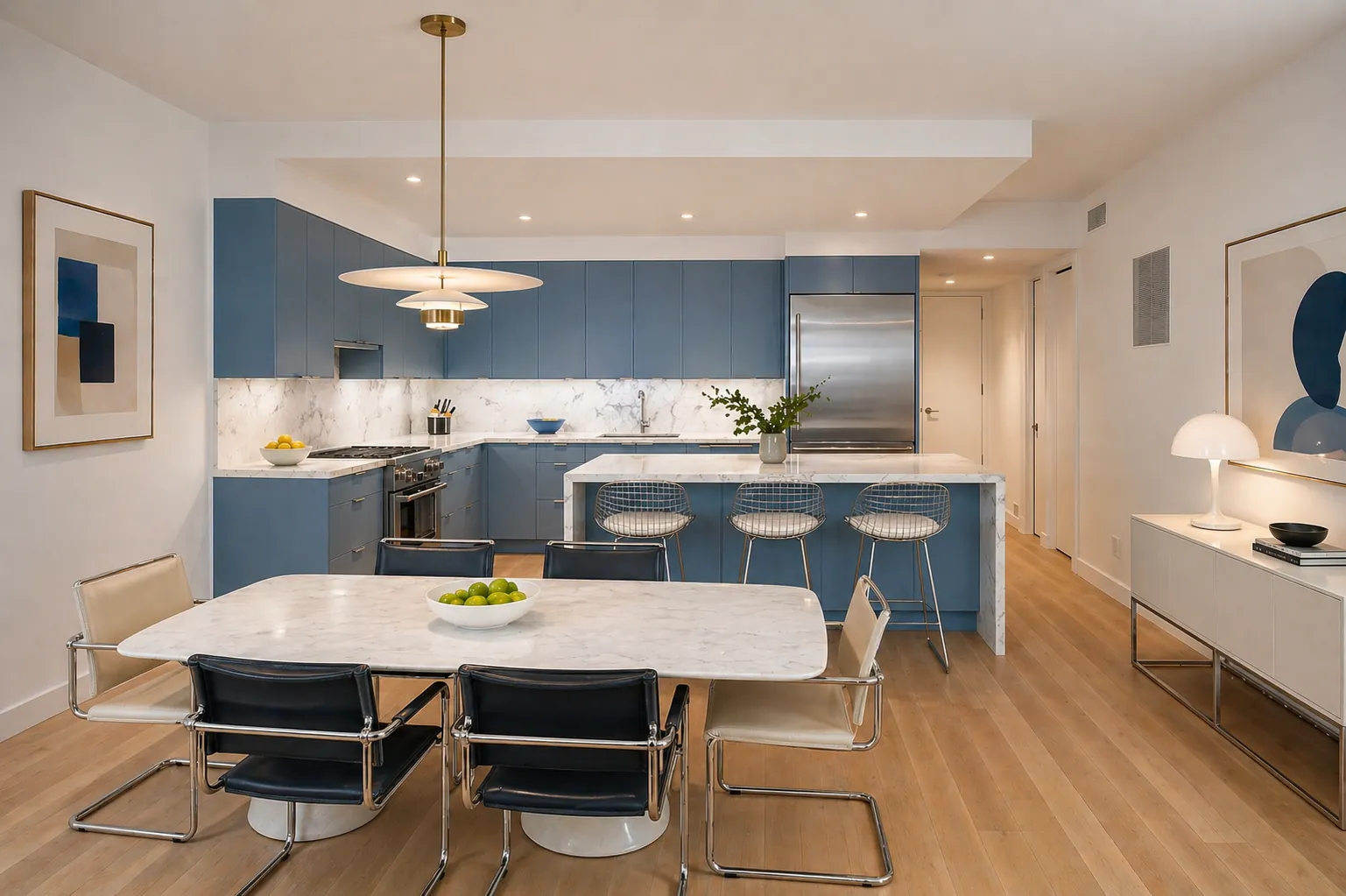
An often-overlooked aspect of open-concept renovations is that the original lighting plan no longer works. The single ceiling fixture that lit a small living room cannot light a combined living-dining- kitchen space, and the boundaries that defined where lights went have disappeared. Without a redesigned lighting plan, open-concept spaces tend to feel either cavernous and dim or harshly over-lit.
We approach open-concept lighting in layers:
Ambient lighting through recessed downlights or cove lighting, distributed evenly across the entire combined space. Modern slim-profile LED downlights (under 1 inch deep) can be installed even in apartments with shallow ceiling cavities, and dimmer switches let the same fixtures provide bright daylight illumination or soft evening atmosphere.
Task lighting at functional zones — under-cabinet lighting in the kitchen area, a pendant or chandelier over the dining table, a floor lamp by a reading chair in the living area. Task lighting also helps define zones in an open layout that has lost its physical walls.
Accent lighting for art, architectural features, and to add visual interest after dark. Wall sconces, picture lights, and adjustable spots all play this role.
A scene-controlled smart lighting system — Lutron RadioRA3 is our most-frequent specification — lets all three layers be controlled together, with preset scenes for cooking, dinner, watching TV, and entertaining.
Acoustic Considerations
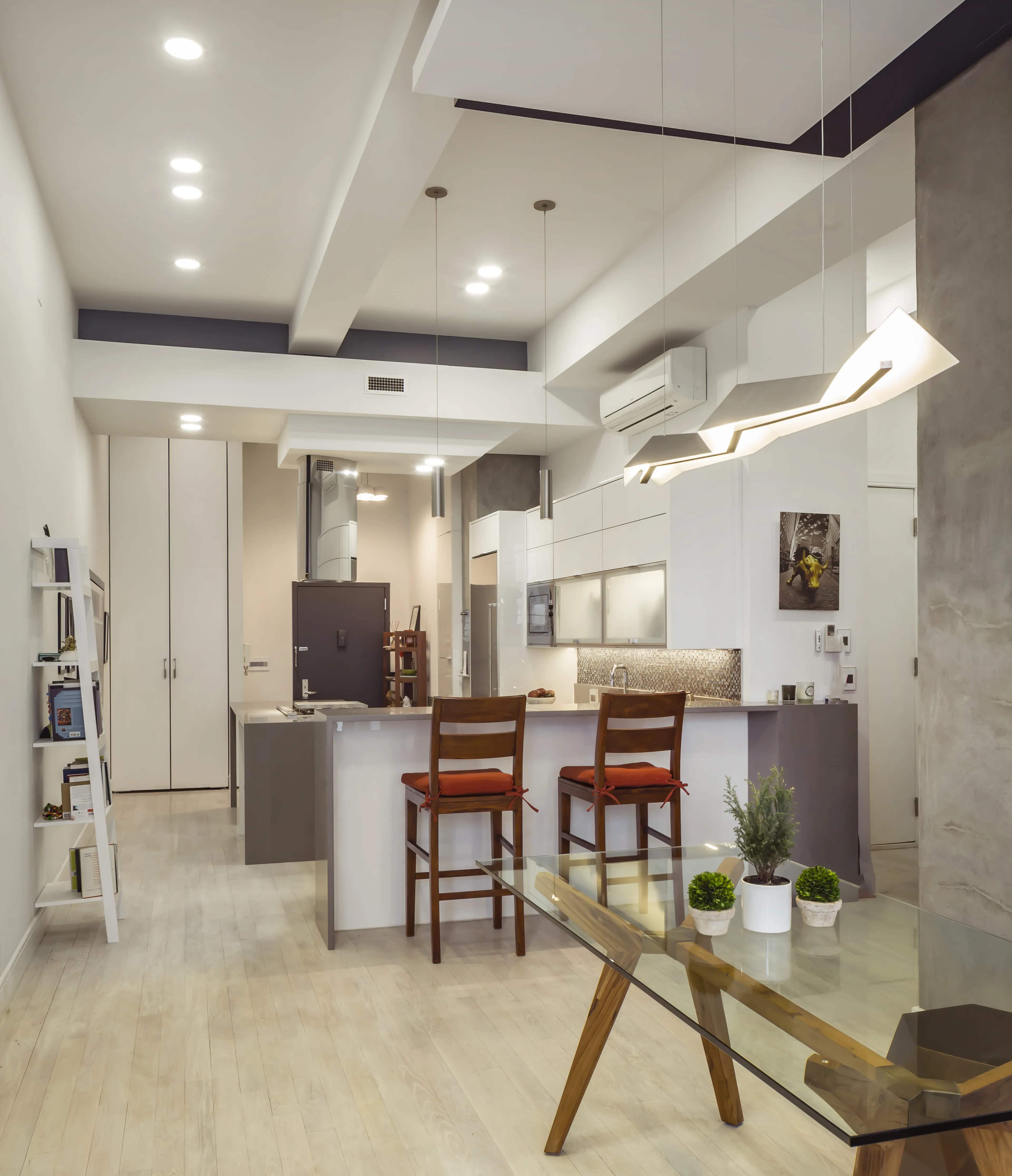
The walls you remove in an open-concept renovation are the same walls that absorb sound and contain noise. Combined kitchen-living spaces are noticeably louder than the separate rooms they replaced, with hard surfaces (hardwood floors, large windows, painted plaster walls) creating an acoustically reflective environment that can make conversation difficult during a dinner party or while cooking.
Soft materials are the simplest counter: a large area rug under the seating zone, fabric upholstery on dining chairs, drapery panels that absorb reflections from window walls, and an upholstered dining banquette if space allows. For larger combined spaces or projects with a particular focus on entertaining, more involved solutions include acoustic ceiling treatments (perforated panels with sound-absorbing batting behind) or acoustically engineered millwork on accent walls.
The second acoustic consideration is sound transmission to neighbors. Removing walls and refinishing floors can change how sound travels to apartments above, below, and adjacent. We specify acoustic underlayment beneath new flooring (Acoustik or similar resilient mat) and verify that any new mechanical equipment meets the building's noise requirements before installation.
Layouts That Work Best for Open-Concept
Not every NYC apartment is a candidate for full open-concept living, and not every owner is happy with the result even when the space supports it. The layouts that consistently work best have a few characteristics in common:
A single major exposure. Apartments with all major windows on one wall benefit dramatically from open layouts that let light reach deeper into the unit. A classic six with a south-facing wall of windows is an ideal candidate.
An awkwardly-sized middle room. Many prewar apartments have a small foyer or formal dining room that does not function well as a separate space and is too small to be useful in modern life. Combining it with adjacent rooms almost always improves the apartment.
An owner who actually entertains and cooks. Open layouts shine when the kitchen is part of the social space. For owners who prefer to keep cooking activity contained — or who have specific concerns about cooking smells in the bedroom or living area — a partial-open layout with a pass-through or pocket doors may be a better fit than full open-concept.
Designing With the Long View
An open-concept renovation is among the most expensive and disruptive projects an NYC apartment owner can undertake. It is also one of the most rewarding when done well — a transformation that genuinely changes how the apartment feels every day and that meaningfully improves resale value. The key to getting it right is partnering with a design-build team that can identify the structural realities early, navigate the approval processes efficiently, and coordinate the dozens of trades involved in executing the work.
At Knockout Renovation, we have completed open-concept transformations in apartments and brownstones across NYC for over 30 years, from compact one-bedrooms to full-floor classic tens. If you are considering opening up your apartment, we would love to walk through your specific space and what is possible.