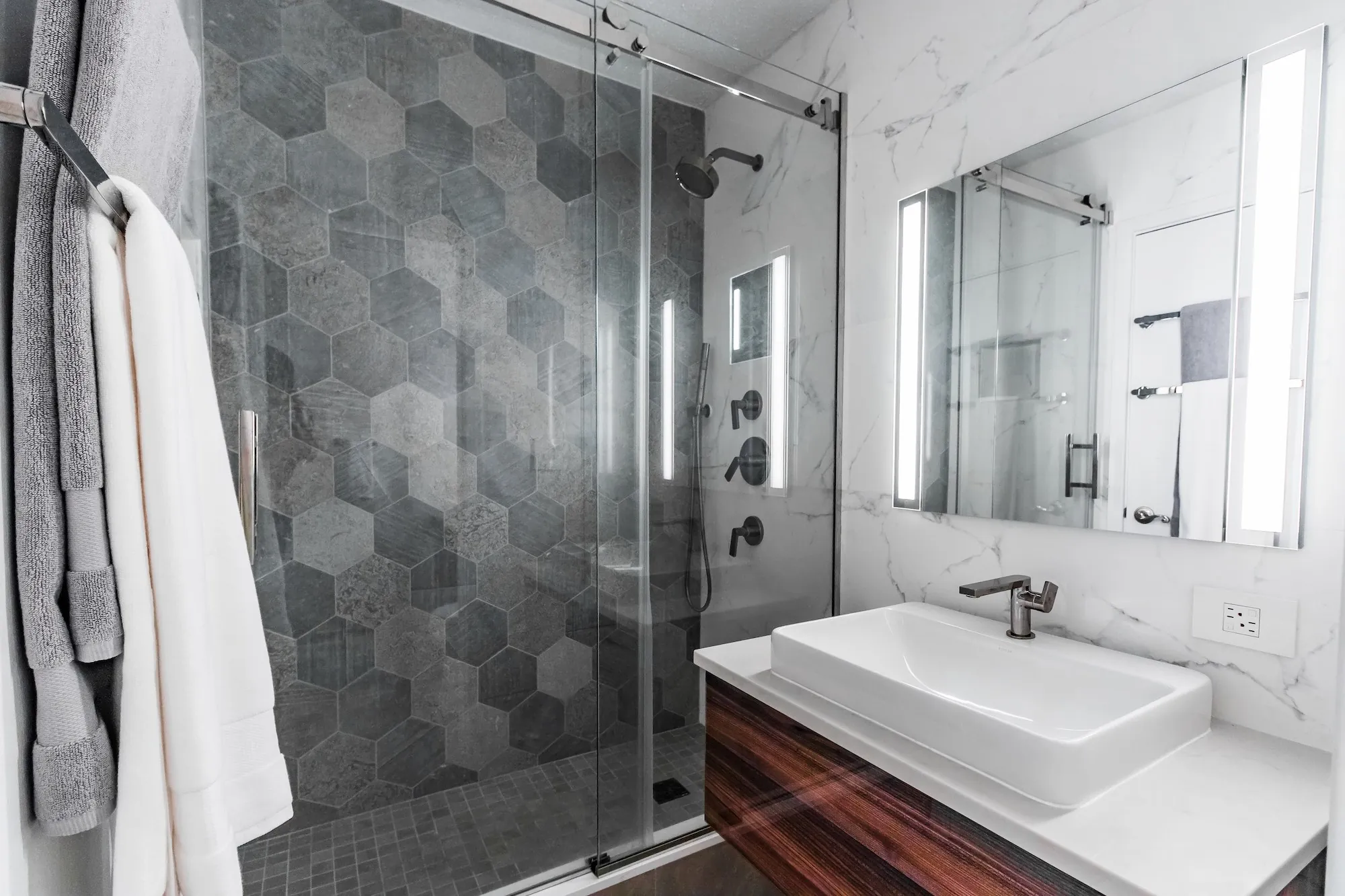
Bathroom design has come a long way from white subway tile and basic chrome fixtures. Today's NYC homeowners want bathrooms that feel like a retreat, a space that balances everyday function with genuine luxury. Whether you are renovating a compact prewar bathroom or designing a spacious primary suite in a new condo, these five trends are defining the best bathroom renovations across the city right now. Each one can be adapted to work within the unique constraints of New York City apartments, where every square inch matters and building regulations add an extra layer of complexity.
1. Spa-Inspired Wet Rooms
The wet room concept, where the shower area flows seamlessly into the rest of the bathroom without a curb or glass enclosure, has become one of the most requested designs in NYC apartment renovations. Inspired by high-end hotels and European spas, wet rooms create a sense of openness that makes even a small bathroom feel significantly larger.
In a wet room, the entire floor is waterproofed and sloped toward a linear drain, eliminating the need for a traditional shower pan or tub enclosure. This design works particularly well in compact NYC bathrooms where a swinging glass door would eat up valuable floor space. A frameless glass panel or half-wall can provide a splash zone without closing off the room.
NYC considerations: Proper waterproofing is absolutely critical in apartment buildings where a leak can damage units below. We use multi-layer waterproofing systems with flood testing before any tile is installed. Your building's management company or co-op board will likely require documentation of waterproofing compliance, and our team handles all of that as part of the process.
2. Large-Format Tiles
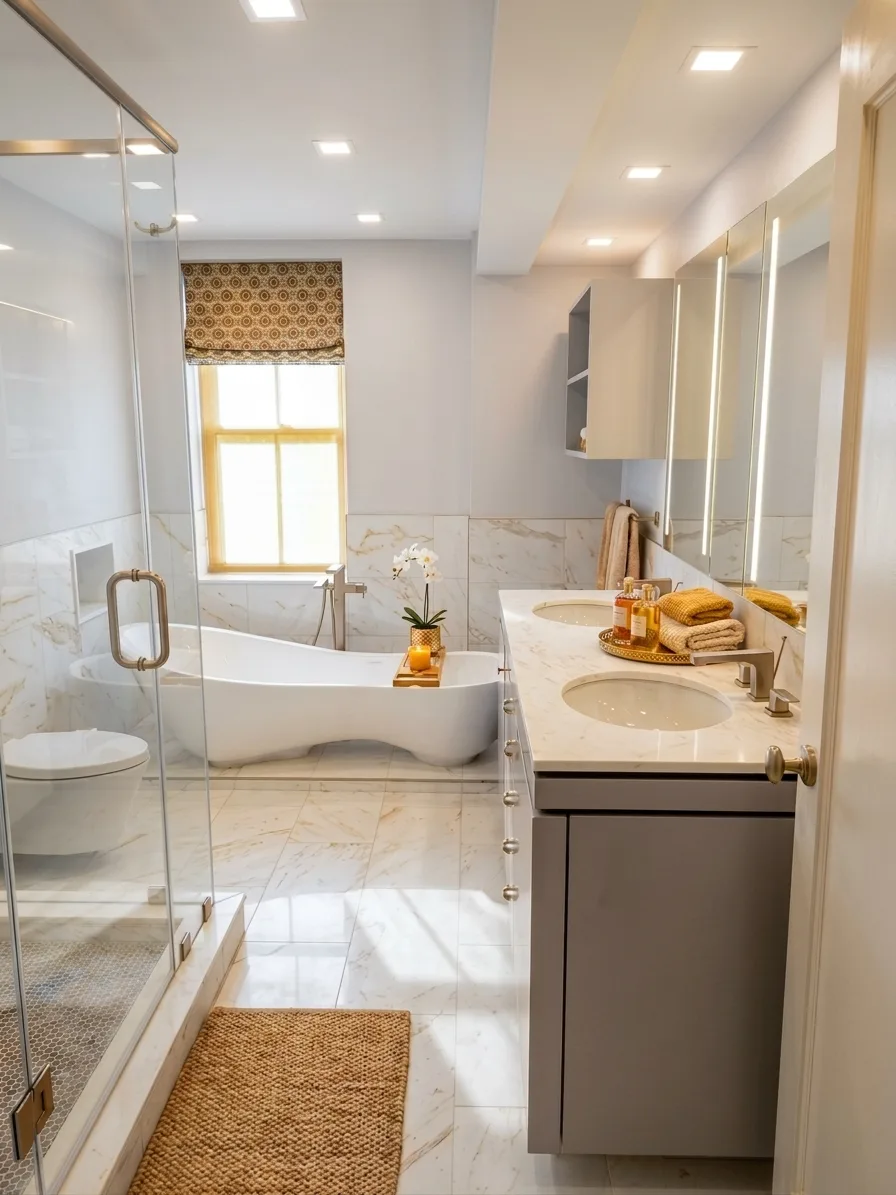
Large-format tiles, generally 24 by 24 inches or larger, have replaced the standard 12-by-12 tile as the go-to choice for modern bathroom renovations. The reason is simple: fewer grout lines create a cleaner, more expansive visual that makes bathrooms feel bigger than they are. This is especially valuable in NYC, where the average apartment bathroom is well under 50 square feet.
Porcelain tiles that convincingly mimic natural stone, concrete, or even wood are available in formats up to 48 by 48 inches. These allow you to achieve the look of a luxurious marble slab at a fraction of the cost and with none of the maintenance concerns. Rectified edges ensure tight, minimal grout joints for the sleekest possible finish.
NYC considerations: Large tiles require perfectly flat substrates, which means additional prep work in older buildings where walls and floors are rarely plumb or level. Our tile installers use self-leveling compounds and cement board underlayment to create the flat surface these tiles demand. Elevator and hallway dimensions in your building also need to be checked to ensure oversized tiles can be delivered without damage. We measure these access points before ordering materials.
3. Smart Fixtures and Technology
Smart bathroom technology has matured well beyond novelty. Today's intelligent fixtures deliver real comfort and efficiency improvements that justify their cost. The category leaders, TOTO, Kohler, and Duravit, offer products that combine cutting-edge technology with elegant design.
TOTO's Washlet bidet seats and integrated bidet toilets remain the gold standard, offering heated seats, adjustable water temperature and pressure, warm air drying, and automatic deodorizing. Kohler's DTV+ digital shower system lets you program personalized presets for water temperature, flow, and even steam, all controlled from a sleek in-wall touchscreen or your phone. Thermostatic shower valves with digital displays eliminate the morning guessing game of finding the right temperature.
Motion-sensor faucets, illuminated mirrors with built-in defoggers, and smart scales integrated into bathroom flooring are all available and increasingly popular in high-end NYC renovations.
NYC considerations: Smart fixtures require dedicated electrical outlets and, in some cases, hardwired connections behind walls. In older buildings, adding electrical capacity to the bathroom may require running new circuits from the panel. We plan these requirements during the design phase so there are no surprises during construction. GFI protection is required for all bathroom electrical per code, and our licensed electricians ensure full compliance.
4. Floating Vanities for Small Spaces
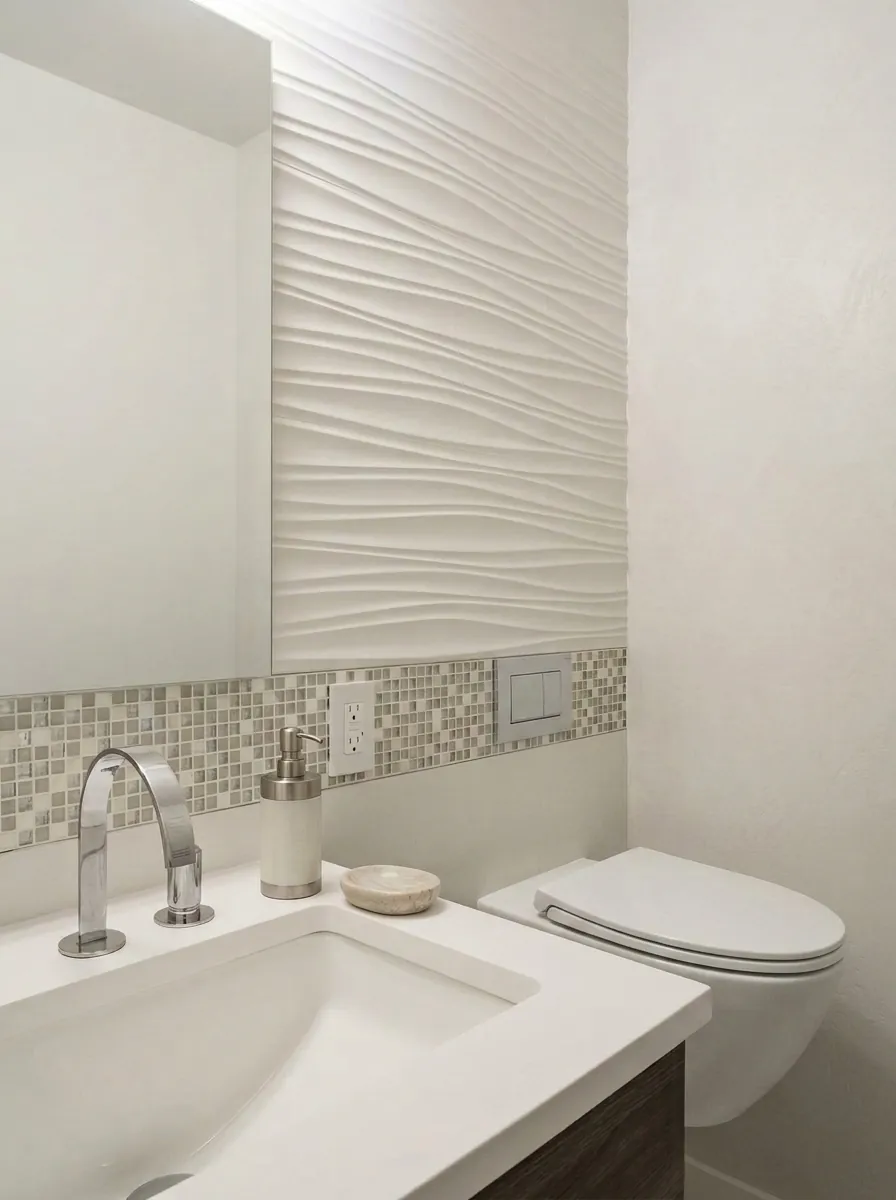
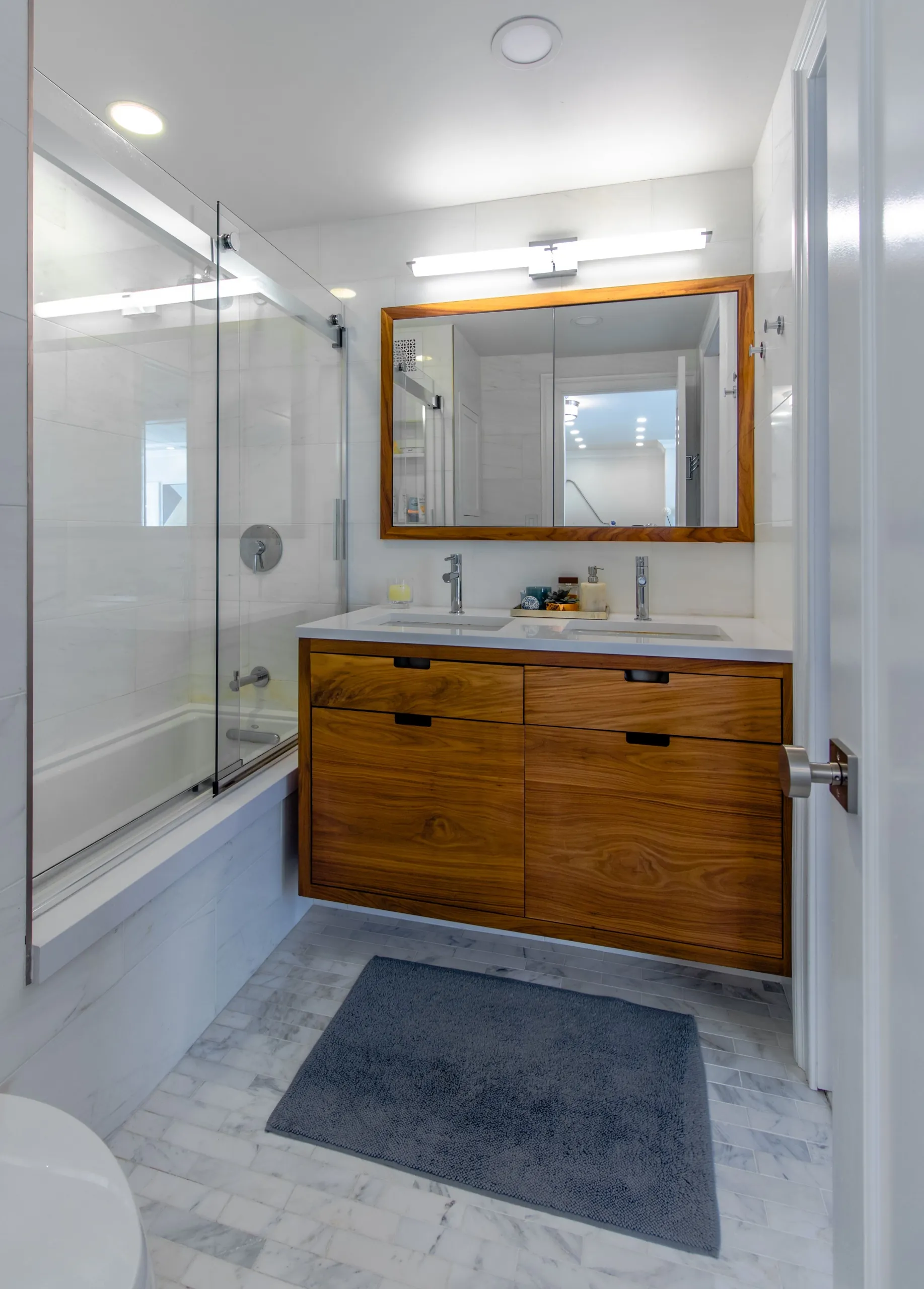
Wall-mounted floating vanities have become the standard for NYC apartment bathrooms, and for good reason. By lifting the vanity off the floor, you gain visible floor space that makes the room feel larger and makes cleaning underneath effortless. The open space below also allows you to see more of the floor tile, reinforcing the sense of spaciousness.
Modern floating vanities are available in an enormous range of styles, from minimalist flat-panel designs in matte lacquer to warm wood-tone options that add organic texture. Slim-profile vessels sinks or undermount basins maximize usable counter space, while integrated drawer organizers keep toiletries tidy in a small footprint.
For especially tight bathrooms, a wall-mounted vanity as narrow as 18 inches deep can provide essential storage without overwhelming the room. Corner-mounted options are another space-saving solution we frequently recommend for NYC half-baths and powder rooms.
NYC considerations: Floating vanities must be anchored to wall studs or blocking, not just drywall. In older buildings with plaster-and-lath walls, proper blocking needs to be installed during construction to support the weight of the vanity, countertop, and sink. Our team reinforces the wall structure during the rough-in phase so the vanity installation is secure and permanent. Plumbing connections also need to be precisely positioned within the wall to align with the vanity's internal layout.
5. Heated Floors
Radiant floor heating has gone from a rare luxury to one of the most requested upgrades in NYC bathroom renovations. Stepping onto a warm tile floor on a January morning is a small daily pleasure that homeowners consistently rank as one of their favorite features after a renovation.
Electric radiant floor mats are the most common system for bathroom retrofits. These thin, flexible heating elements are installed directly beneath the tile and add less than a quarter inch to the floor height. They are controlled by a programmable thermostat, often with Wi-Fi connectivity, so the floor is warm when you need it and off when you do not. Operating costs are modest, typically a few dollars per month for a standard bathroom.
Radiant heat also reduces humidity and helps keep tile floors dry, which is a genuine safety benefit in addition to the comfort factor.
NYC considerations: Electric radiant mats require a dedicated circuit, which your electrician will need to run from the panel. In buildings with limited electrical capacity, this may require a panel upgrade. Floor height is also a consideration, especially in apartments where bathroom floor levels are governed by building code relative to the hallway. Our team calculates floor buildup during design to ensure radiant heat can be included without creating threshold issues at the doorway.
Bringing These Trends Home
The best bathroom renovations do not just follow trends. They adapt current design ideas to the specific realities of your space, your building, and your daily routine. What works beautifully in a brand-new condo tower may need to be thoughtfully modified for a 1920s co-op, and that is where experienced design-build guidance makes all the difference.
At Knockout Renovation, we have been designing and building bathrooms across New York City for over 30 years. We know which products perform, which trends have lasting power, and how to make the most of every square foot. If you are considering a bathroom renovation, we would love to walk you through your options and show you what is possible in your space.